Blog Feed

Not-So-Sober October.

A few months ago my husband and I agreed that we would partake in Sober October. My hubby is a big Joe Rogan fan (as am I); every October Joe and his buddies (amongst a million other people, I’m sure) drop their habits for 31 days of sobriety; on top of that, they engage in some type of physical challenge that is above their usual level of fitness.

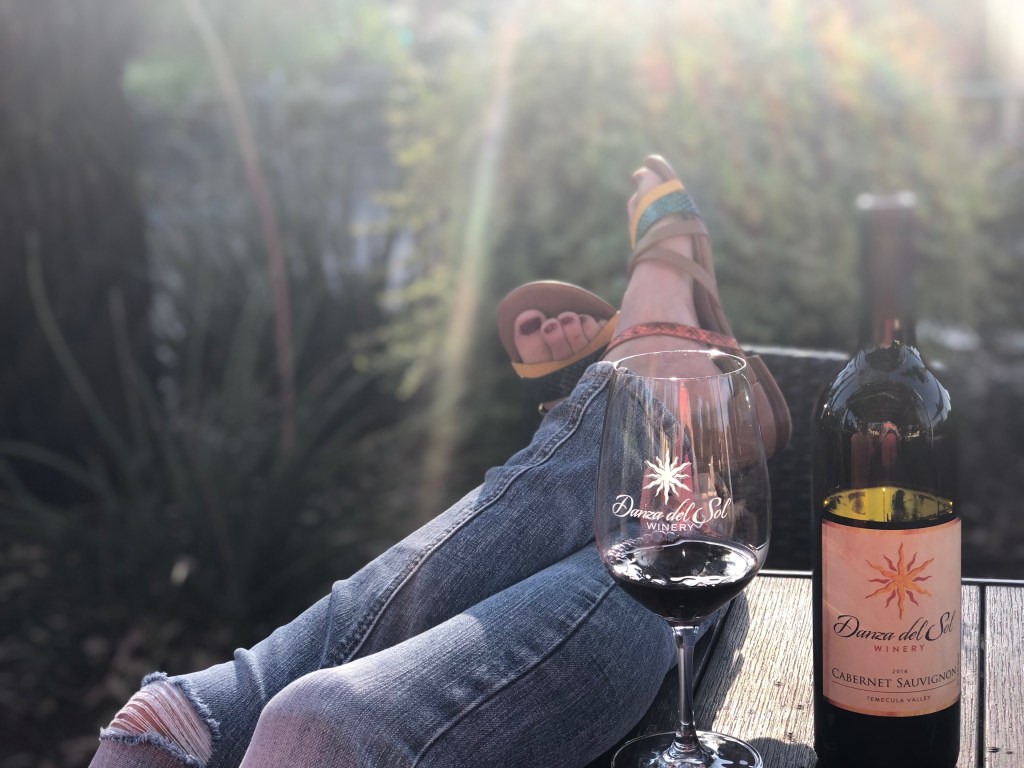
Dan and I agreed to the sober part. We love our booze. We are big foodies and even bigger on pairing our beverages with food. My hubby enjoys an excellent cigar with a fine whiskey. There’s nothing I love more than a delicious, hard cab. We got married at winery for gods’ sake. We both agreed that being sober for a month would give us new perspective and be an overall great challenge. We are both super passionate as well as uber-stubborn. We will do anything someone else says that we cannot do. Not surprisingly, we are somewhat competitive with one another. So, there was no way either of us would break this promise, right? Wrong. So, so wrong…

Fast forward to this past week. This has been more of a mind-game than I ever imagined. So, what does this have to do with diabetes? Read on…

My fellow T1’s out there can attest to how difficult it is to live with this disease. The funny thing about this disease in particular is we are given so many choices. This is often uncommon in chronic illness. Think about the primary cause of renal failure, retinopathy, strokes, heart attacks in persons’ with diabetes…SUGAR! It all comes down to uncontrolled sugar over years and years. Our sugar is… well… something we can control for a large majority of the time, maybe 85%. Point here is this – I was diagnosed 18 years ago, and I made the unconscious decision to take care of myself (yes, unconscious – I had no idea what was happening to my body). Now though, it’s much more of a conscious decision. But I chose to live a long time, as free as possible of diabetes complications. With this decision comes an extreme, extreme amount of self-control. I am very hard on myself. I count every single carb that goes into my mouth. I consider calories as well (more later on how fatty foods affect blood sugars). I make sure I get numerous veggie servings as well as 1-2 fruit servings each day. I try to eat only complex carbs. I don’t eat any fried food. I rarely eat more than 30 carbs per meal. Needless to say, I am obsessive over my diet and my sugars. As I write this, I think to myself… hindsight is 20/20. I see now the error in my thought processes about Sober-October…

I’ve been fine, physically. Mentally though, not super. The past few nights at dinner (when I typically enjoy a glass of cab), I have found myself more focused on my food. That doesn’t even seem possible, but it happened. Each night I’ve looked at my food with less desire, and each time I finished eating, I was literally so unsatisfied. Not surprisingly, I found myself craving that glass of wine. To me, the craving was an expected response. Anytime you intentionally deprive your body of something, you tend to think of it more. What surprised me was how much more deprived I felt.  I have spent the majority of my life in restriction when it comes to food and drink. That said, this additional restriction I placed on myself has been such a bigger mind game than I expected it to be. I didn’t expect it to be easy, but I didn’t expect it to make me feel more childlike and like I had another rule to follow. I emphasize – I have spent my life in rules when it comes to what goes in my mouth. For me, the red wine that I love and adore so much is something that I enjoy without regard to my diabetes; I do not have to adjust my insulin doses based on my red wine intake. 

I decided to talk to a close friend about this. This is what she said: well yea dude, when you have to think and calculate and check yourself every time you ingest anything and you can’t have the one thing that helps you relax, that blows… you are dealing with more to stay alive than most people. Why do Sober October if it’s going to decline your mental health? To her it was so simple to wonder why the hell I decided to take on this challenge to begin with. It was so helpful to see this from another persons’ lens. And it really put things into perspective for me.

This is what I’ve concluded:

  • I agreed to Sober October to prove I can stop drinking. I can; I’ve proven it. I don’t have a drinking problem, and I’m not an alcoholic.  
  • Wine helps me to relax. Yup, I said it. I’m a nurse and an educator. I know all about being a responsible adult and that we’re not supposed to use substances to change our mood.
  • I work my ass off to stay healthy. I work out like a feen. My body fat is low. My diet is excellent. My liver enzymes are on point. My overall lifestyle is active and healthy. I’m probably healthier than I would have been without diabetes. I drink 1-2 glasses of wine each night, and there is not a thing wrong with that. 
  • I’ve proven time and time again that I have self-control. For me, Sober-October was about proving I have self control. I don’t need to keep on proving that. 
  • I enjoy wine. It helps me to be a tiny less anal, a tiny less anxious and it tastes so yummy. And, it doesn’t change my blood sugar.
  • It’s okay to “fail” sometimes. I pride myself on being a constant achiever. I can view myself as a failure at Sober October, or I can be more positive about it. Either way I slice it, maybe it’s good for me to be reminded that I can’t, and shouldn’t, do everything all the time. 
  • A friends’ blog recently reminded me of how hard I (we) work in our day-to-day lives and how much I (we) deserve to relax.

That’s all, folks.

Cheers!
Low, low, low, low, low, low, low.

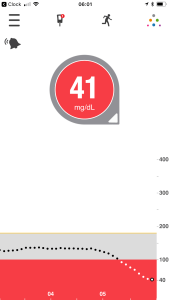
Hypoglycemia is a real pain in the ass. Yesterday, I woke up at 43. There’s nothing quite like staggering to the kitchen, not coherent enough to fully know what’s happening, in order to eat at such an ungodly hour. The feeling is pretty similar to being drunk, except for it is not fun. At all. One of my least favorite things in life is being forced to eat. When other people talk about being low, they sometimes talk about an opportunity to eat anything they want. To me, there isn’t anything opportunistic-seeming about being low. Not once during a low do I think… gosh, this is a great opportunity to have that vanilla ice cream sundae with whipped cream and chocolate chip cookies I’ve been thinking of; let me whip that up. If you’ve been low before, you’ll understand what I’m talking about here. The brain is not working at full capacity during hypoglycemia. When we’re less than 70, our brain isn’t getting enough sugar, which equates to not thinking correctly, which also equates to not giving caring about what we’re eating to treat our low. At least for me.

While we’re on the topic, let’s discuss the after-effects of hypoglycemia, which is why I’m writing this post. I talk with my T1 friends a lot about this. While an episode of hypoglycemia can be relatively short-lived, its’ effects can be felt for hours after the event. We know that hypoglycemia causes the person (if they’re lucky enough to be symptomatic) to be shaky, anxious, tachycardic, short of breath, confused, sweaty… the list goes on. When you think about how our body compensates during hypotension or a fever, we know that our other systems kick into high gear in order to pick up the slack. Once the blood pressure is back to normal, we are happy, but we’re tired. It was a huge stress on the body. Hypoglycemia is the same. If we’re lucky enough, our bodies do a great job of compensating until we fix the issue. Once our sugar is normal again, we feel better mentally (and even physically compared to 15 minutes prior), but we also feel like a train just ran us over. Twice.

Can I get an amen?

So, meanwhile… I was 43 (went to bed with a sugar of 130 the night before). Ate a banana and some peanut butter, stumbled back into the bedroom. I honestly thought I was going to sit on the kitchen floor and go to sleep. The bedroom just seemed So. Far. Away. I woke up a few hours later with an okay sugar, went about my day. Was low again. Treated it. Was low again. Treated it. As my friend Marty says, “Hypoglycemia begets hypoglycemia”. It’s true though – once you’re low once, the likelihood of being low again a short while later is increased. Anyway, the point here is that being low sucks. Being low more than once in a day double sucks. 

I’ve called into work sick, or late, because of a low. Even though I know that it’s legit, I always worry that others’ don’t know that. And they mostly don’t. We may look fine after a low, but we don’t always feel fine. 

Couple FUN FACTS…
~ Hypoglycemia is technically anything less than 70 (less than 60 for pregos), but many people with diabetes have symptoms at higher numbers if they tend to sit at a higher average
~ No two people react the same to low blood sugar. Some people have no symptoms. Some of my friends are laughing and conversing like normal while they’re treating a low of 24. Me? I’m on the floor at 24, drooling.
~ There is actual evidence to back up that “mood” that we get with a low blood sugar. I promise.
~ People with diabetes also have an irresponsible liver. Most people think it’s just the pancreas that sucks, but the liver is actually affected, too. In someone without diabetes and without liver disease, the liver is pretty effective at combating lows. When our body senses blood glucose lowering, the liver kicks out some sugar to normalize things. Because this mechanism in diabetes in stunted, and sometimes altogether absent, we cannot rely on our liver to act quickly enough.

Folks, that’s it. Moral of the story is that yesterday sucked for multiple reasons. I knew today would be better, and it is. 

Who are you.

Hey. You already know me. I’m Kelly, have T1, blah, blah, blah. That covers quite a bit. I love my life, my family and my career. I’m first a wife, second a dog-mom and third a career-woman. Late in my teens and early into my twenties, when I was trying to figure out, What am I going to do with myself? I told myself that I would have a career and be forever able to support myself. Not only did that happen, but **BONUS**, I met and married a man that supported that mission. It isn’t easy finding a man that is confident enough to have an equally confident woman. You can see how handsome said-man is below.

I’m a registered nurse (RN) and Certified Diabetes Educator (CDE). I take my job seriously, mainly because I love what I do. When I decided to become a nurse, I didn’t have a good reason (or really, any reason, if we’re being truthful). Now, though, I can tell you exactly why it happened as it did. I was destined to do this. My diabetes has been the answer to the why of my profession. Cheesy and dramatic as it may seem, my disease and career go hand-in-hand. Emergency nursing was never something I dreamt of. But it’s everything I ever thought “nursing” was (even though it’s such a small portion of what “being a nurse” actually is), and I love it with my whole heart. It is a part of who I am. Diabetes education has an obvious root in my personal history.

Let’s talk about my husband. For so many reasons, he inspires me. His wisdom is far beyond his years, and he constantly humbles me. He reminds me daily of the good in this world.

My kids. They are my everything. They are constantly teaching me about unconditional love, and they remind me of what vulnerability and trust are. Most days I feel that dog lives are more worthwhile than humans. On my worst diabetes days, they keep me above water.

My friends. YOU. GUYS. They are the best. Taking care of your diabetes (not just living with it, but actually paying it mind in public) can be real cumbersome, detailed and intrusive. These girls don’t think twice about my self-care; they don’t care about needles in a restaurant, sneaking my own food in, blood sugar checks. If I’m low? These girls got it. My girlfriends are some bad B’s.

It’s evident I have so much to be grateful for. As I become a more whole person and learn more about myself and what being graceful is like, I continue to see how blessed I am to have the friends and family that I do. Not sure if I’ve mentioned, buuuuuut… I have type one diabetes, and it’s hard ((PSA: This is a blog about living with diabetes. If you continue to read, you might as well sit back and become real comfortable with hearing about T1)) I would be the basket case I am times a zillion (scary!) if I didn’t have the support system I do. Mad props to my husband, the best Type 3 (T3) I could ask for, as well as my amazing friends that are constantly looking out for me, making sure I can eat wherever we go and loving me when I’m a complete jerk.